
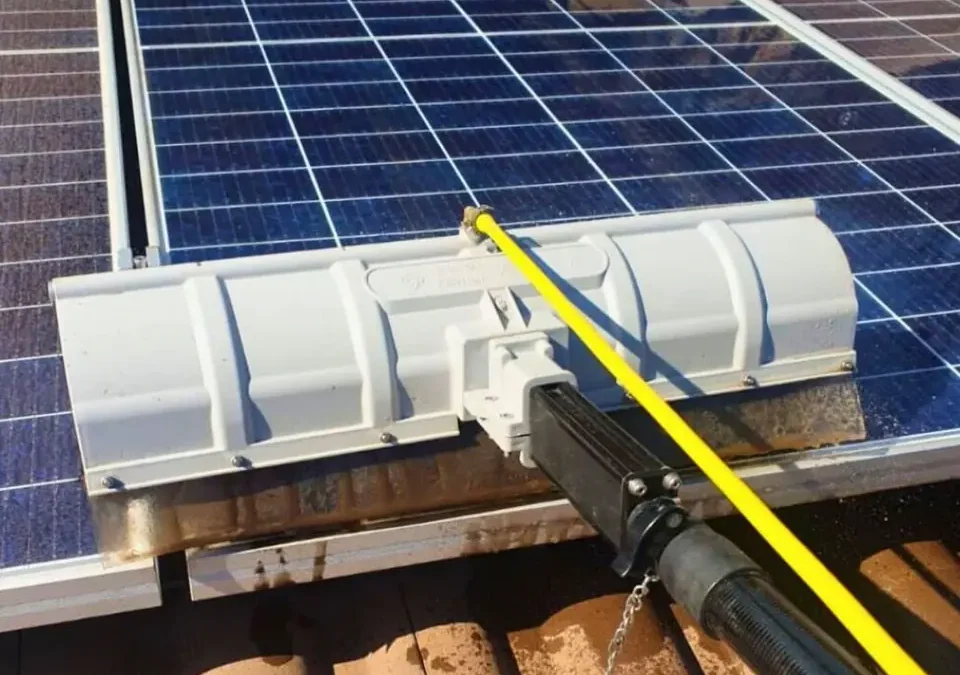
Motorised Solar Brush VS Manual Solar Brush
The C21 solar panel cleaning machine and brush is designed and manufactured for the cleaning of photovoltaic power panels. The cleaning system offers the advantages of low cost, ease of use, and highest efficiency, making it suitable for your domestic, commercial, and agricultural applications.
Introduction – Pros and Cons
Choosing the Right Solar Panel Cleaning Tool: C21 Motorized Brushes vs. Manual Options
Before we dive into the article, it is good to note to always use Pure Water to clean solar panels and windows, not just for a spotless finish and the elimination of any cleaning chemicals, but also to prevent future mineral build up on the glass from untreated water being used for cleaning. Even clean municipal water has a higher than optimal concentrate of dissolved solids that has to be removed before it can be used to clean glass surfaces.
Solar panels are a smart investment for anyone looking to harness renewable energy, but keeping them clean is key to maintaining their efficiency. Dust, bird droppings, pollen, and other debris can reduce output by up to 20-30% if left unchecked. When it comes to cleaning, you basically have two main approaches:
Manual brushes, which rely on good old elbow grease, and motorized options like the C21 series, which bring some tech into the mix. In this article, we’ll break down the differences, along with the pros and cons of each, to help you decide what’s best for your setup, whether it’s a small domestic rooftop setup or a larger installation.
What Are Manual Solar Brushes?
Manual solar brushes are the straightforward, no-frills tools. They’re essentially long-handled brushes with soft bristles designed not to scratch the glass surface of solar panels. You attach them to a pole, often telescopic, and scrub away using Pure Water. These are with water-fed systems that spray as you go, making the process a bit easier, but it’s all powered by you.
Pros of Manual Solar Brushes:
- Affordability: These brushes are cheap to buy upfront, and don’t require batteries or electricity. If you’re on a budget or just have a few panels, this keeps costs low.
- Precision Control: You can really target stubborn spots, like dried-on grime or bird mess, and adjust your pressure on the fly. This hands-on approach minimizes the risk of over-scrubbing delicate areas.
- Simplicity: No tech to fail means they’re reliable in remote spots or during power outages. Plus, they’re lightweight and easy to store.
Cons of Manual Solar Brushes:
- Labour Intensive: Cleaning a full array can take hours, especially if panels are high up or spread out. It’s physically demanding, which isn’t ideal for everyone.
- Inconsistent Results: Human effort varies—some days you might miss spots, leading to uneven cleaning and potential hot spots on panels that reduce efficiency over time.
- Time Sink: For larger systems, you’ll need to clean more frequently to keep up with dirt build up, but the manual process makes it hard to stick to a schedule without hiring help.
What Are C21 Motorized Solar Brushes?
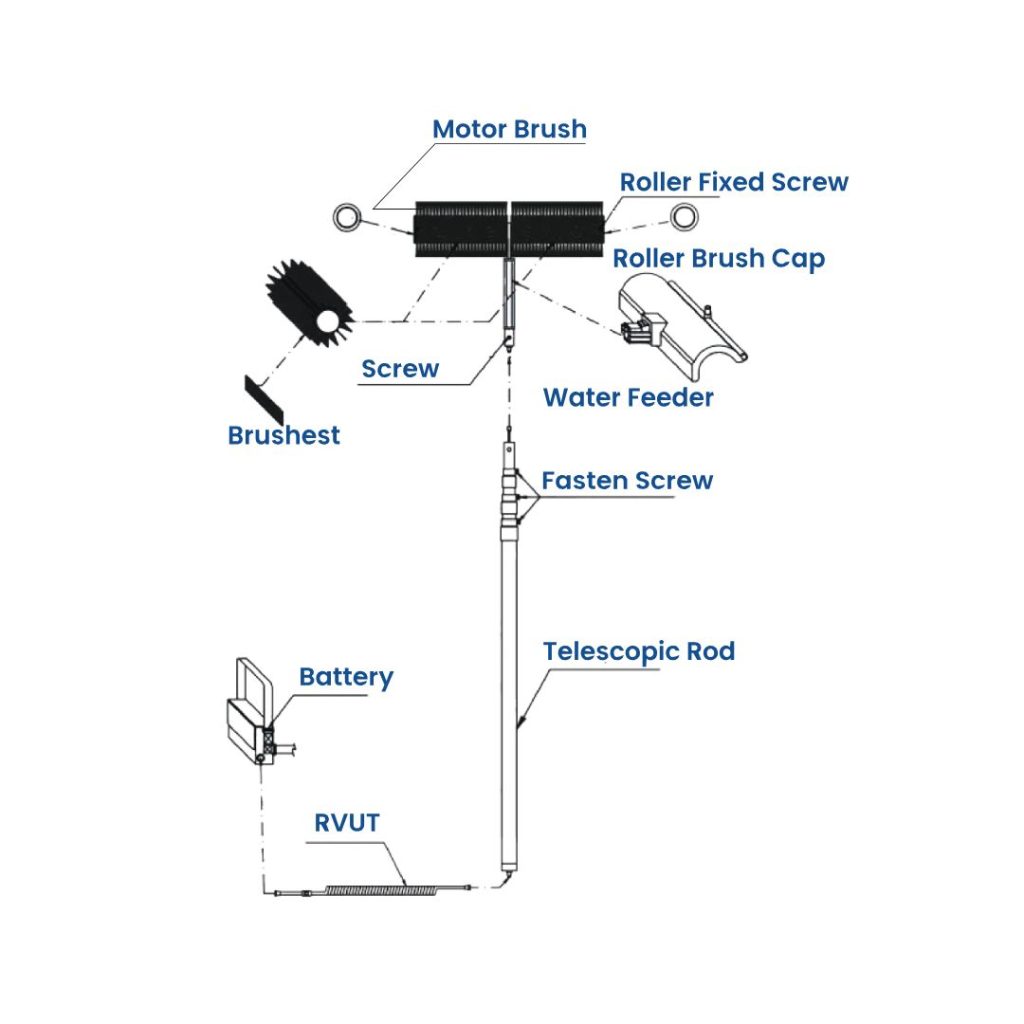
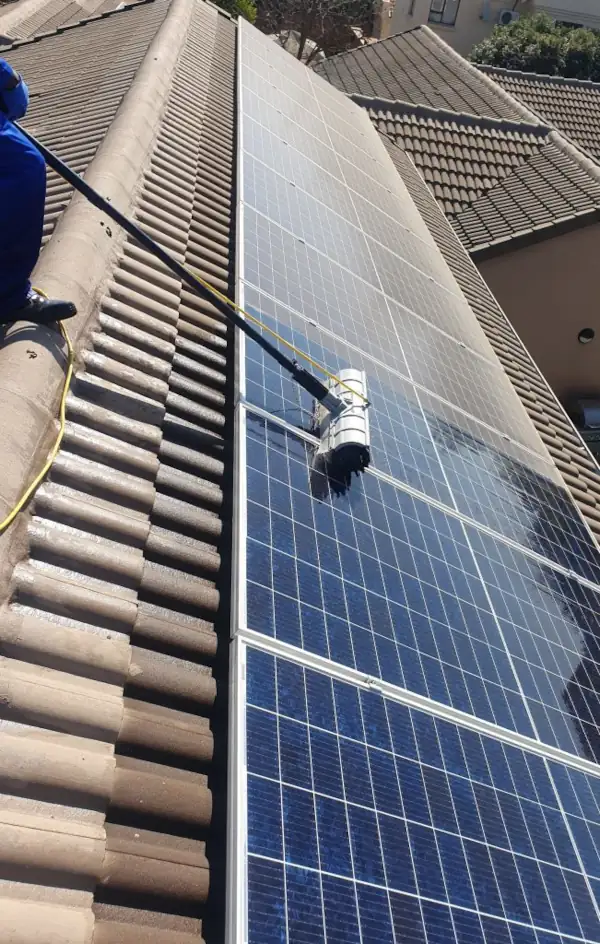
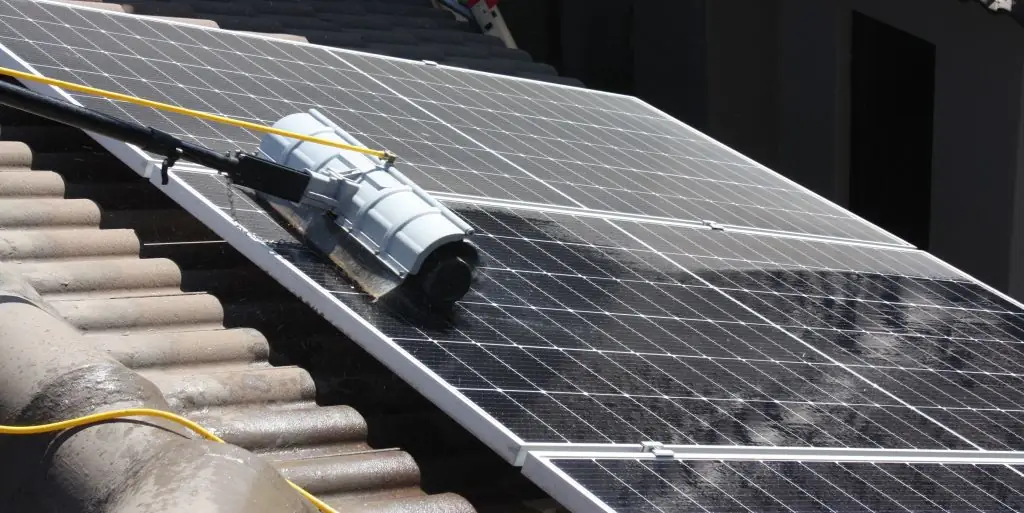
The C21 is a step up in the world of solar cleaning tech. It’s a motorized brush system, often with a brushless motor for efficiency, attached to a telescopic pole that can extend up to 10 meters or more. Models like the C21 are designed specifically for photovoltaic panels. The motor spins the brush head, doing most of the work for you. It’s powered by a lithium battery or alternatively a transformer setup, making it portable, and aimed at both residential and commercial users who want faster results.
Pros of C21 Motorized Solar Brushes:
- Efficiency and Speed: The motorized rotation cleans faster and more thoroughly than manual scrubbing, covering larger areas in less time, great for big installations where manual methods would drag on.
- Reduced Physical Strain: Less effort required means it’s safer and more accessible, especially for older users or those with mobility issues. The lightweight design (often under 10kg).
- Eco Friendly: Many C21 models use minimal water and can operate in dry mode, conserving resources while still delivering a deep clean. The brushless motor is quiet and energy efficient, with low noise and power consumption.
- Consistency: Automated spinning ensures even coverage, reducing the chance of missed spots and helping maintain peak panel performance over time.
Cons of C21 Motorized Solar Brushes:
- Higher Cost: Higher initial purchase cost, plus ongoing expenses for batteries or replacement parts. It’s an investment that might not pay off for tiny setups.
- Dependency on Power: You need to charge the battery, and if it dies mid-job and there is no electricity for the transformer, you’re stuck. In very remote areas without easy access to electricity, this could be a hassle.
- Not Ideal for All Terrains: While versatile, extremely uneven or sandy environments (like deserts) might clog the mechanism faster than a simple manual brush.
Key Differences Between C21 Motorized and Manual Solar Brushes
At their core, the big divide is automation versus human power. Manual brushes are all about control and low-tech reliability, shining in small-scale or budget-conscious scenarios where you can afford the time. The C21, on the other hand, leverages motor-driven tech for speed and ease, making it a game-changer for frequent cleanings or expansive arrays.
In terms of reach, both often use telescopic poles, but the C21’s motor allows for longer sessions without fatigue. Water usage is another differentiator—manual methods might waste more if you’re not careful, while C21’s atomization system is designed for efficiency.
Ultimately, the choice boils down to scale: manuals for occasional DIY jobs, C21 for pro-level productivity.
Wrapping It Up: Which One Should You Pick?
If you are just starting your new cleaning business or your own solar setup is modest and you’re okay with putting in some sweat equity, a manual brush will get the job done without breaking the bank. But for anyone dealing with more panels or valuing time, the C21 motorized brush is worth the splurge—it’ll pay for itself in energy savings and hassle avoided. Whichever way you go, regular cleaning using either brush and Pure Water is non-negotiable for maximum power output.
Enquire about cleaning water systems
Please send an Email to David@windowandsolarcleaning.co.za
Thank you